

Spotted an error? Did you work on this production, or do you keep a memory or a document from it? We would be glad to hear from you.
Technique · Heritage · The Key Drawing
The
Genga
原画 · Genga · The key animation drawing · The cornerstone of any collection
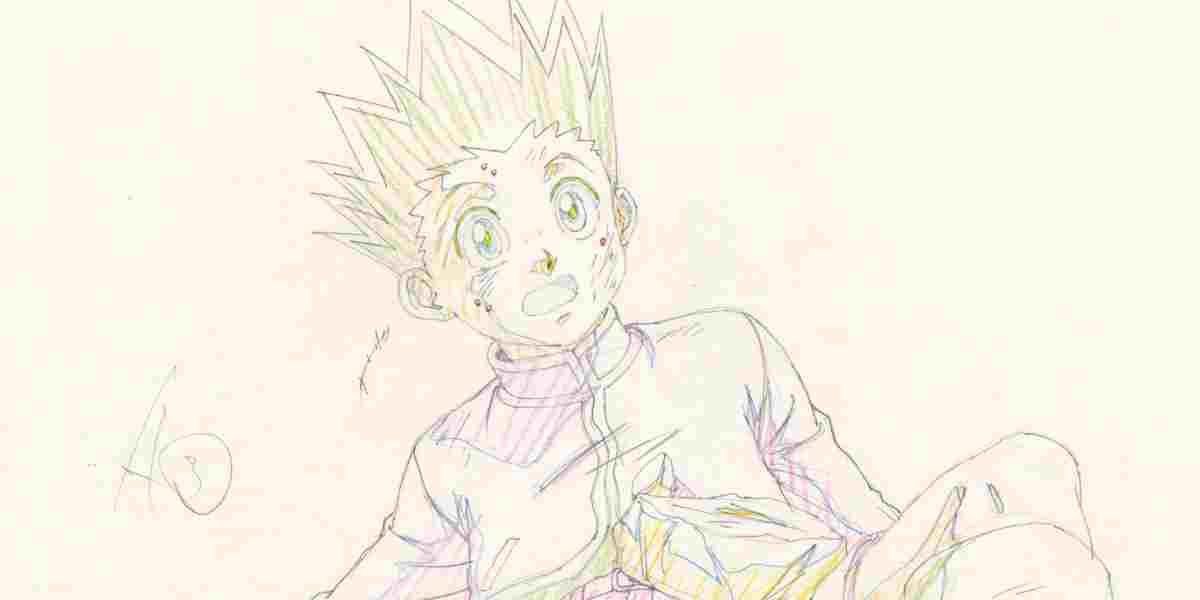
Pencil on paper. The extreme position of a movement. An animator's handwritten signature. The genga is the rawest document of all, the closest to the artist's hand — and the one most sought after by collectors and institutions around the world.
Definition — what exactly is a genga?
The term genga (原画 — literally “original drawing”) refers to the key animation drawing in the Japanese production process. It captures the extreme positions of a movement — the start and end points of an action — and serves as the reference document for the in-between animators.
A genga is always drawn in pencil on paper — never inked, never colored. It is a working tool whose purpose is to pass information about movement on to the next animator. That technical function is precisely what makes it significant today: the genga is the most direct trace of the animator's hand.
Key drawings (genga) are the fundamental animation drawings that define the key positions of a character in motion. They are produced by experienced animators known as genga-man, and serve as a guide for the inbetweeners who fill in the intermediate frames.
— Wikipedia EN — Key animation · en.wikipedia.org/wiki/Key_animation
Anatomy of a genga — what you see on the paper
- Cut number — shot identifier (e.g. C-047)
- Cel number — position within the cut
- Instructions for the dôga-man handwritten
- Timing notes — speed of the movement
- Registration marks — alignment crosses
- Visible corrections — pencil pentimenti
- Signature or stamp of the animator
- Episode / film title — studio stamp
- Registration holes — two holes at the bottom
- Pin marks in the corners
- Format Standard A4 or B4
- Ouji marking 王 for a major key position
Hierarchy — from dôga-man to chief animation director
Sōsakuga kantoku (総作画監督) — supervises the whole production. Their corrections on a genga are the mark of authenticity collectors prize most.
Sakuga kantoku (作画監督) — corrects the genga episode by episode. These corrections appear as pencil pentimenti on the drawing.
Genga-man (原画マン) — produces the key drawings. Their signature or stamp on the drawing is the primary element of authentication.
Dôga-man (動画マン) — draws the intermediate frames. Entry level. Their drawings are dôga, not genga.
What makes a genga significant
| Factor | Impact | Example |
|---|---|---|
| Identity of the animator | Major | Genga by Yoshinori Kanada or Mitsuo Iso — exceptional historical significance |
| Sequence concerned | Major | Transformation, climax, iconic scene |
| Franchise | Major | Akira, Ghibli, Evangelion — worldwide interest |
| Complexity of the drawing | Significant | Dynamic action > static pose |
| Corrections by the sakuga kantoku | Significant | Visible pentimenti — documentary value |
| Condition | Significant | No folds, no foxing, no tears |
| Documented studio provenance | Significant | Verified provenance > undocumented origin |
Conservation — what time does to a genga
The paper used for genga in Japanese studios from the 1970s to the 1990s was standard drawing paper — not acid-free. Over time: yellowing caused by the paper's acidity, foxing (brown spots), mechanical fragility along folds, and gradual fading of the pencil.
SAKUGAART · Studio Partnerships · France — Hauts-de-France
These documents are your studio's creative heritage. SAKUGAART works with Japanese studios to document, contextualize and exhibit these materials in Europe — with no commercial dimension, on a purely editorial and cultural basis.
If you would like your work to be better known to audiences outside Japan, please get in touch.
Contact: sakugaart.com · Hauts-de-France, France