

Spotted an error? Did you work on this production, or do you keep a memory or a document from it? We would be glad to hear from you.
Series feature · Toei Animation · TV Asahi · 1986–1989
Knights of the Zodiac
Saint Seiya
聖闘士星矢 · セイントセイヤ · 一九八六 ― 一九八九
One hundred and fourteen episodes broadcast by TV Asahi from October 11, 1986, to April 1, 1989, based on Masami Kurumada's manga serialized in Weekly Shōnen Jump. Produced by Toei Animation, drawn by the duo of Shingo Araki and Michi Himeno and carried by Seiji Yokoyama's score, the series reached France on April 6, 1988, in the Club Dorothéeprogram, where it became a pillar for an entire generation. This feature traces its genesis, its making, its unfinished ending, its worldwide career from Italy to Brazil, and its descendants, from the Hades OVAs to the 2023 film.
Genesis: from the 1985 manga to the 1986 series
Masami Kurumada (車田正美) was already an established author at Shūeisha, known for Ring ni Kakero (リングにかけろ), when Weekly Shōnen Jump launched his new series in its first issue of 1986, on newsstands on December 3, 1985. Seinto Seiya tells the story of a Japanese orphan trained in Greece, Seiya, who becomes the Bronze Knight of Pegasus, one of eighty-eight warriors sworn to protect the goddess Athena, reincarnated as a young girl, Saori Kido. With Shiryū (the Dragon), Hyōga (the Swan), Shun (Andromeda) and Shun's brother Ikki (the Phoenix), he faces other knights and then other gods.
The formula is an alloy: Greek mythology and constellations, metal armor — the “Cloths” (聖衣), which come apart and reassemble into totemic figures — and the succession of battles typical of shōnen. The first collected volume was published on September 10, 1986; the series would run to twenty-eight, until April 10, 1991.
The move to the screen was fast: just ten months separated the first chapter from the first broadcast, on Saturday, October 11, 1986, at 7 p.m. on TV Asahi. This tight schedule weighed on the series throughout its run: it quickly caught up with the manga and had to invent an entire arc to give the author time to move ahead.
Making it: Toei, Araki and Himeno, Bandai
Toei Animation produced the series for TV Asahi. Kōzō Morishita (森下孝三) was series director for episodes 1 to 73 and Kazuhito Kikuchi (菊池一仁) for episodes 74 to 114; Takao Koyama (小山高生) handled series composition for episodes 1 to 73 and Yoshiyuki Suga (菅良幸) for episodes 74 to 114; the episode directors included Tomoharu Katsumata (勝間田具治) and Shigeyasu Yamauchi (山内重保). Art direction of the backgrounds went to Tadao Kubota (窪田忠雄).
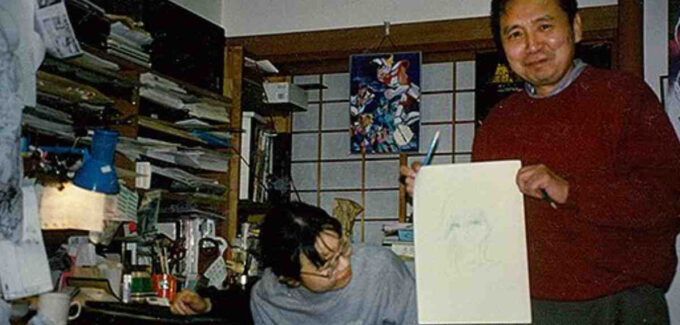
The visual identity is that of Shingo Araki (荒木伸吾) and Michi Himeno (姫野美智), credited together for character design. Their work went beyond tracing Kurumada's line: the series needed stable models that dozens of animators could reproduce week after week, and armor legible enough to be animated. The “Araki-Himeno characters” (荒木姫野キャラ) became, according to the Nico Nico dictionary, one of the driving forces behind the success of the work itself.
The Cloths, from screen to toy
In 1987, Bandai launched the 聖闘士聖衣大系 line (Saint Cloth Series): articulated figures onto which pieces of die-cast metal armor fit. Its success established a principle the brand would revisit in December 2003 with the 聖闘士聖衣神話 line (Saint Cloth Myth), launched with Pegasus, and in August 2011 with its EX version.
「累計販売数約900万個(2018年6月末時点見込 ※聖闘士聖衣神話EXを含む)」
“About nine million units sold in total (estimate as of the end of June 2018, including the Saint Cloth Myth EX line).”
— Bandai Spirits, press release of June 6, 2018, for the fifteenth anniversary of the Saint Cloth Myth line (SAKUGAART translation)
Three arcs and an unfinished ending
The TV series falls into three parts. The first and third adapt the manga; the second is an anime-original creation, born of the lack of material on paper.
| Episodes | Arc | Source | Direction · composition |
|---|---|---|---|
| 1-73 | ★★Sanctuary (聖域編) : Galaxian Wars, Black Knights, Silver Knights, the battle of the Twelve Houses | Manga | Kōzō Morishita · Takao Koyama |
| 74-99 | ★Asgard (アスガルド編) : Hilda of Polaris and Odin's God Warriors | Original | Kazuhito Kikuchi · Yoshiyuki Suga |
| 100-114 | Poseidon (海皇ポセイドン編) : the Marinas and the undersea sanctuary | Manga | Kazuhito Kikuchi · Yoshiyuki Suga |
The Sanctuary arc is the heart of the work: the ascent of the twelve houses of the Zodiac, each guarded by a Gold Knight, up to the Pope, the usurper who threatens Athena. The Asgard arc, absent from the manga, moves the action to a mythical North: the priestess Hilda, under the spell of a ring, sends the seven God Warriors against the Sanctuary. It paves the way for the Poseidon arc, which closes the series in April 1989.
Why the series stops
The story breaks off just as the manga is beginning its final part, the war against Hades. English-language Wikipedia describes a series “canceled and left unfinished.” An article by Gcores puts forward two causes: the adaptation lagging behind publication, and tensions between the author, Toei and Bandai, which it itself presents as a rumor. The Hades arc would wait until 2002 to be animated.
The team, the voices, the music
The Japanese cast brought together several of the most sought-after voices of the 1980s. Tōru Furuya, already Amuro Ray in Gundam, voices Seiya; Hideyuki Tanaka is the narrator.
| Character | Japanese voice (1986) | French voice (1988) | French name |
|---|---|---|---|
| ★★Seiya, Pegasus | Tōru Furuya (古谷徹) | Éric Legrand | Seiya, at first “Seyar” |
| Shiryū, Dragon | Hirotaka Suzuoki (鈴置洋孝) | Marc François | Shiryû |
| Hyōga, Swan | Kōichi Hashimoto (橋本晃一) | Marc François | Hyôga |
| Shun, Andromeda | Ryō Horikawa (堀川りょう) | Serge Bourrier | Shun |
| Ikki, Phoenix | Hideyuki Hori (堀秀行) | Henry Djanik | Ikki |
| Saori Kido, Athena | Keiko Han (潘恵子) | unconfirmed | Saori |
| Narrator | Hideyuki Tanaka (田中秀幸) | unconfirmed | — |
Seiji Yokoyama and the theme songs
Seiji Yokoyama (横山菁児), who died in 2017, wrote an expansive orchestral score with choir and soprano (Kazuko Kawashima) that set the series apart from most television productions of the time. The Japanese theme songs were entrusted to the band MAKE-UP, then to Hironobu Kageyama.
| Episodes | Opening | Ending | Performers |
|---|---|---|---|
| 1-73 | ★★「ペガサス幻想」 (Pegasus Fantasy) | 「永遠ブルー」 (Blue Forever) | MAKE-UP |
| 74-114 | 「聖闘士神話〜ソルジャー・ドリーム〜」 (Soldier Dream) | 「夢旅人」 | Hironobu Kageyama & Broadway |
France: the Club Dorothée years
Acquired by AB Productions, which then made TF1's children's programming, the series joined Club Dorothée on April 6, 1988, under the title Les Chevaliers du Zodiaque. It arrived in the Japanese wave that followed Dragon Ball and came a few months before Fist of the North Star, and Journal du Geek counts it among the “flagship anime” of the program, which stayed on air until August 30, 1997.
The French title would enjoy unexpected fortune: according to English-language Wikipedia, it inspired the titles of most other versions, from I Cavalieri dello Zodiaco to Knights of the Zodiac. In the first episodes, the hero is called “Seyar,” a name also found in a song by Serge Maille, L'Invincible Seiyar.
The voices and the theme song
Éric Legrand voices Seiya, Marc François Shiryû and Hyôga, Henry Djanik Ikki, and Serge Bourrier Shun. The often free-wheeling dub has become an object of cult devotion as much as affectionate mockery. Éric Legrand, also the French voice of Vegeta in Dragon Ball Z, died in May 2025.
The theme song, Les Chevaliers du Zodiaque, is sung by Bernard Minet to lyrics by Jean-François Porry and music by Gérard Salesses, Dorothée's regular composer; the single was released in 1988 on AB. It was followed by La Chanson des chevaliers, by the same performer, and an album by Serge Maille.
Controversies
Along with other Japanese series on Club Dorothée, Les Chevaliers du Zodiaque was soon “singled out” for its violence, according to Journal du Geek. The debate peaked in 1989 with Ségolène Royal's book Le Ras-le-bol des bébés zappeurs, which targeted the program's content in general.
A series still alive in France
The series has been rerun on many channels (AnnuSéries cites Game One, TMC, AB1, MCM, Mangas, France 3 and NT1, among others). On May 14, 2022, the Grand Rex in Paris hosted Saint Seiya Symphonic Adventure, a film concert produced by Overlook Events, with the Sinfonia Pop Orchestra conducted by Jordan Gudefin, the singer NoB, performer of Pegasus Fantasy, the soprano Kazuko Kawashima and Éric Legrand as a guest.
Europe and the world
English-language Wikipedia speaks of broadcasts in more than seventy-five countries. Its success centered on three regions — Latin Europe, Latin America and East Asia — while Germany and the United States remained on the sidelines.
Italy
I Cavalieri dello Zodiaco arrived on Odeon TV on March 26, 1990, with the first fifty-two episodes. Asgard and Poseidon, acquired by Fininvest, followed on Italia 7 from November 6, 1990, under the title Il ritorno dei Cavalieri dello zodiaco. The dub, produced by Studio P.V. under the direction of Enrico Carabelli, renamed Seiya “Pegasus,” Saori “Lady Isabel” and the armor “vestigia.” Italia 1's reruns from October 2000 were heavily cut; Yamato Video and Eagle Pictures released a complete video edition with the original dub in 2024.
Spain
TVE aired the first twenty-four episodes in 1991 before pulling the series; Telecinco picked it up in full in 1993, then offered a remastered version from October 21, 2006.
Latin America
In Mexico, the series arrived on Canal 13 in November 1992, with Jesús Barrero as the voice of Seiya; TV Azteca would air the Hades arc in marathons in 2008 and 2009. In Brazil, TV Manchete launched it on September 1, 1994, as part of an agreement with the toy maker Samtoy. Dubbed in haste by the Gota Mágica studio under the direction of Gilberto Baroli (Hermes Baroli voices Seiya), it doubled the usual audience of the channel's children's slot, with peaks of fifteen Ibope points according to Omelete, and paved the way for Sailor Moon and Yu Yu Hakusho.
North America
The first English version, Knights of the Zodiac, did not appear until 2003: forty episodes adapted and toned down by DiC, broadcast on Cartoon Network from August 30, 2003, and on the Canadian channel YTV from September 5. ADV Films released sixty uncut episodes on DVD at the same time. A new complete dub, produced by Sentai Studios, was offered by Netflix from October 15, 2019, then withdrawn in December 2021; Crunchyroll began streaming the series in April 2023.
Asia
In Hong Kong, the series was scheduled late at night and, according to a 1990 press article reproduced by Gcores, attracted more than a million viewers; the first film was released there with a Category II rating because of its fight scenes.
「就以深夜播映的《聖鬥士星矢》電視片集爲例,居然有百多萬收視率」
“Take the example of the TV series Saint Seiya, broadcast in the middle of the night: it still reaches more than a million viewers.”
— Hong Kong press, 1990, quoted by Gcores (SAKUGAART translation)
In mainland China, the series left a deep mark on the generations born in the 1970s and 1980s, notes China Daily.
| Country | First broadcast | Channel | Title |
|---|---|---|---|
| Japan | Oct. 11, 1986 | TV Asahi | 聖闘士星矢 Original |
| ★★France | Apr. 6, 1988 | TF1 · Club Dorothée | Les Chevaliers du Zodiaque |
| Italy | Mar. 26, 1990 | Odeon TV, then Italia 7 | I Cavalieri dello Zodiaco |
| Hong Kong | around 1990 | unconfirmed | 聖鬥士星矢 To be determined |
| Spain | 1991 | TVE, then Telecinco (1993) | Los Caballeros del Zodiaco |
| Mexico | Nov. 1992 | Canal 13 | Los Caballeros del Zodiaco |
| Brazil | Sept. 1, 1994 | TV Manchete | Os Cavaleiros do Zodíaco |
| United States | Aug. 30, 2003 | Cartoon Network | Knights of the Zodiac (DiC) |
| Canada | Sept. 5, 2003 | YTV | Knights of the Zodiac |
| Germany | — | no broadcast found | — |
| Arab world | — | nothing found | — |
| Mainland China | unconfirmed | unconfirmed | 圣斗士星矢 To be determined |
Films, the Hades OVAs and sequels
During the broadcast, Toei drew four films from the series, most of them shown as part of the Toei Manga Matsuri alongside other in-house productions. Each pits the knights against a deity invented for the screen.
| Japanese release | Original title | Literal translation | Director · running time | Adversary |
|---|---|---|---|---|
| July 18, 1987 | 邪神エリス | Eris, the Evil Goddess | Kōzō Morishita · 45 min | Eris |
| Mar. 12, 1988 | 神々の熱き戦い | The Heated Battle of the Gods | Shigeyasu Yamauchi · 45 min | Dolbar, lord of Asgard |
| July 23, 1988 | ★真紅の少年伝説 | Legend of Crimson Youth | Shigeyasu Yamauchi · 75 min | Abel, god of the Sun |
| Mar. 18, 1989 | 最終聖戦の戦士たち | Warriors of the Final Holy Battle | Masayuki Akehi · 45 min | Lucifer |
The Hades cycle (2002–2008)
Thirteen years after the series ended, Toei finally adapted the Hades arc as OVAs, first broadcast on pay-per-view on SKY PerfecTV!, then on Perfect Choice, and released on DVD.
| Broadcast | Part | Episodes | Direction · script |
|---|---|---|---|
| Nov. 9, 2002 – Apr. 12, 2003 | ★★Sanctuary (冥王ハーデス十二宮編) | 13 | Shigeyasu Yamauchi · Michiko Yokote · characters by Araki and Himeno |
| Dec. 17, 2005 – Feb. 18, 2006 | Inferno, part one (冥界編前章) | 6 | Tomoharu Katsumata · Yōsuke Kuroda |
| Dec. 15, 2006 – Feb. 18, 2007 | Inferno, part two (冥界編後章) | 6 | Tomoharu Katsumata · Yōsuke Kuroda |
| Mar. 7 – Aug. 1, 2008 | Elysion (エリシオン編) | 6 | Tomoharu Katsumata · Yōsuke Kuroda |
The Sanctuary part keeps the 1986 voices. From Inferno on, the main cast was replaced, with only the narrator Hideyuki Tanaka remaining: Masakazu Morita takes over Seiya, Takahiro Sakurai Shiryū, Hiroaki Miura Hyōga, Yūta Kazuya Shun, Katsuyuki Konishi Ikki and Fumiko Orikasa Athena. Tomoharu Katsumata, an episode director on the original series, returned to direct the Underworld chapters; SAKUGAART recorded his testimony in an interview.
On February 14, 2004, the film Tenkai-hen Overture (天界編 序奏 〜overture〜)was released in theaters, directed by Shigeyasu Yamauchi — the prologue to a heavenly arc that would never see the light of day.
The descendants
| Date | Work | Format |
|---|---|---|
| June 21, 2014 | Legend of Sanctuary (レジェンド・オブ・サンクチュアリ), directed by Keiichi Satō | CGI feature film |
| 2015 | Soul of Gold, centered on the Gold Knights | Online series |
| July 19, 2019 | Knights of the Zodiac: Saint Seiya | CGI series, Netflix, then Crunchyroll (2022) |
| Apr. 28, 2023 | Knights of the Zodiac, directed by Tomasz Bagiński | Live-action film, Toei and A Really Good Film Company, distributed by Sony Pictures outside Japan |
Legacy and production heritage
In Japan, the series won the Animage Grand Prix for 1987 and still ranked fifty-third in the magazine's list of the hundred best anime in 2001; a national TV Asahi poll placed it twenty-fifth in 2006. The manga passed fifty million copies in circulation in 2022, according to English-language Wikipedia.
For French audiences, the work remains inseparable from its dub, its theme song and Club Dorothée. For the history of animation, it marks the high point of the collaboration between Shingo Araki and Michi Himeno, for which SAKUGAART has published an interview with Michi Himeno.
Traces of the making
Like all television series of its time, Saint Seiya was produced on cels: each shot required model sheets (設定, settei), key drawings (原画, genga), in-betweens (動画, douga), painted cels and backgrounds. These documents, scattered after production, are today a fragile heritage, and the series is among the most copied of its era. SAKUGAART devotes a guide to authenticating such pieces; only independent, piece-by-piece expert examination can establish the origin of a document.
Timeline
| Date | Event | |
|---|---|---|
| Dec. 3, 1985 | First chapter in Weekly Shōnen Jump (issue 1 of 1986) | Japan |
| Sept. 10, 1986 | First collected volume | Japan |
| Oct. 11, 1986 | ★★First episode on TV Asahi | Japan |
| 1987 | Bandai's Saint Cloth Series line | Japan |
| July 18, 1987 | First film, 邪神エリス | Japan |
| Apr. 6, 1988 | ★★Arrival on Club Dorothée on TF1 | France |
| 1988 | Start of the original Asgard arc (episode 74) | Japan |
| Apr. 1, 1989 | Last episode (114) | Japan |
| Mar. 26, 1990 | First Italian broadcast, Odeon TV | Italy |
| Nov. 1990 | End of the manga in Weekly Shōnen Jump | Japan |
| Nov. 1992 | First Mexican broadcast, Canal 13 | Mexico |
| Sept. 1, 1994 | First Brazilian broadcast, TV Manchete | Brazil |
| Nov. 9, 2002 | ★Start of the Hades OVAs | Japan |
| Aug. 30, 2003 | Knights of the Zodiac on Cartoon Network | United States |
| Dec. 2003 | Saint Cloth Myth line | Japan |
| Feb. 14, 2004 | Tenkai-hen Overture | Japan |
| Aug. 1, 2008 | End of the Elysion arc | Japan |
| Oct. 15, 2019 | New English dub on Netflix | Worldwide |
| May 14, 2022 | Saint Seiya Symphonic Adventure at the Grand Rex | France |
| Apr. 28, 2023 | Live-action film | Worldwide |