

Spotted an error? Did you work on this production, or do you keep a memory or a document from it? We would be glad to hear from you.
Michi Himeno, the feminine hand behind Saint Seiya
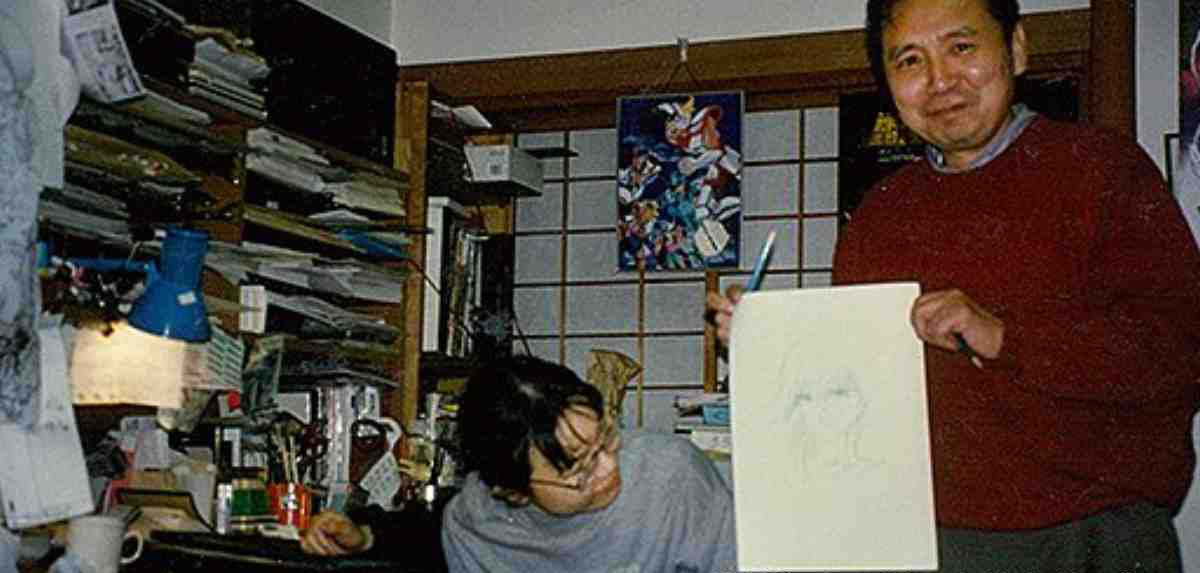
For fifty years, working alongside Shingo Araki, Michi Himeno shaped some of the most recognizable female faces in Japanese animation — Marie Antoinette and the androgynous heroine Oscar in The Rose of Versailles (1979), Lunlun in Hana no Ko Lunlun (1979), Athena and Saori Kido in Saint Seiya (1986–1989), the princesses of the space opera Ulysses 31 (1981) and of ThunderCats. Out of school at only 17, at Toei Animation at 18, co-founder of Araki Productions at 19, she and her lifelong partner — often described as her husband — gave a whole generation of television viewers, in Europe and beyond, its visual signature. He drew the male heroes; she drew the heroines. Still active today, Himeno remains one of the last great living memories of the golden age of Japanese television shōjo and shōnen.
Hyōgo Prefecture · Japan
female characters · animation director
Cutie Honey · at 17
1975 · with Shingo Araki
Lady Oscar · 1979
Knights of the Zodiac · 1986
DiC · TMS · 1981
OVA · 2002–2008
1939 - 2011
Hyōgo, Tokyo, Toei — starting out at 17
Michi Himeno (姫野 美智) was born on August 16, 1956, in Hyōgo Prefecture — a coastal region of west-central Japan whose best-known city is Kobe. She grew up during Japan's high-growth era of the 1960s, which saw the rise of an urban middle class and the massive expansion of youth media: weekly manga and television animation.
Her path into animation was early and unusual. At only 17, in 1973, she began working professionally at Toei Animation — then the dominant studio in Japanese animation. Her first notable credit was on Cutie Honey (キューティーハニー), the anime adaptation of Go Nagai's comedic and risqué manga, broadcast on NET (later TV Asahi) from October 1973. The series employed an experimental team that mixed promising newcomers with industry veterans.
It was on Cutie Honey that Himeno met Shingo Araki, the series' character designer and animation director, then 33 years old. Araki was already recognized in the industry for his work on Babel II (1973) and for his dynamic style. He immediately noticed the young animator's graphic talent. The meeting founded a professional collaboration that would last thirty-eight years, until Araki's death in 2011.
“In 1973, she began her collaboration with Shingo Araki by working on Cutie Honey, then worked at Toei Animation before founding Araki Productions with him in 1975. Together, they worked on many successful films and series. Typically, she works on the female characters while he works on the male ones.”
Wikipedia EN · Michi Himeno
en.wikipedia.org/wiki/Michi_Himeno
For two years (1973–1975), Himeno continued her training at Toei Animation while working alongside Araki on several projects. Her time at Toei gave her technical mastery of the industry standards set by the dominant studio — a training that remained the foundation of her entire later career.
Araki Productions, 1975 — the creative alliance
In 1975, at only 19, Michi Himeno co-founded, with Shingo Araki, Araki Productions (荒木プロダクション). The studio was conceived not as a large full-production workshop but as a specialized service company focusing on character design and animation direction as a subcontractor for the major commissioning studios — chiefly Toei Animation, but also Tokyo Movie Shinsha (TMS), Sunrise and, later, Franco-American studios.
The business model was unusual in the Japanese industry of the 1970s. Rather than producing complete series (which would have required a large staff and substantial working capital), Araki Productions sold targeted design expertise: creating a series' final model sheets, supervising visual consistency, animating the most demanding key frames. The studio therefore stayed structurally lean — a few permanent animators and occasional freelance collaborators.
The first major joint commission was the animation of the giant robot series UFO Robo Grendizer (UFOロボグレンダイザー, 1975–1977), broadcast in France from 1978 under the title Goldorak. On this 74-episode series for Toei, Araki Productions delivered the final character design and key animation. Himeno worked mainly on the female characters (Hikaru, Maria) and on animation direction retakes.
This series set the working model that would endure for forty years: Araki drew the male heroes (Duke Fleed, Koji Kabuto) and the robots in his dynamic, angular style; Himeno reworked, adjusted and finalized the female characters, infusing them with her own more fluid signature.
The stylistic division of work with Araki
The division of work between Himeno and Araki is one of the best documented and most firmly established in Japanese animation. Virtually every studio that hired them together reports the same split: Araki draws the men, Himeno draws the women. But this simple description hides a subtler interplay between two complementary graphic signatures.
1. The Araki style — masculine, dynamic, angular
Since the 1960s, Shingo Araki had developed a recognizable graphic signature: strongly drawn jaws, intense gazes, dramatic locks of hair falling across the forehead, an almost sculptural geometry. This aesthetic suits the male heroes of animated action perfectly — Duke Fleed in Grendizer, Oscar in The Rose of Versailles (her masculine side), Seiya and the five Bronze Knights in Saint Seiya.
2. The Himeno style — feminine, fluid, elegant
Himeno developed a softer signature in counterpoint. The female faces she draws are characterized by more rounded contours than Araki's, large, liquid eyes with dramatically long lashes, flowing hair with undulating movement, and nuanced psychological expressions , even in moments of drama. The result supplies the emotional dimension of the series — where the Araki style brings the dynamism.
“Himeno, who later married Araki, frequently refined Araki's initial sketches, adapting them for fluid movement while infusing a signature softness, particularly evident in their approach to Western-influenced aesthetics, as seen in the Ulysses 31 pilot (1981). This division of labor created visually coherent worlds that blended emotional depth with kinetic energy.”
Grokipedia · Michi Himeno
grokipedia.com/page/michi_himeno
3. Complete professional interdependence
This division is not a hierarchy. On the series that employed them together, the two signatures work as equals: without one, the other would be incomplete. Saint Seiya would not have its dramatic balance without Himeno's faces for Athena and Marin; The Rose of Versailles would not have its energy without Araki's compositions for the action scenes.
The Rose of Versailles, 1979 — the shōjo breakthrough
1979 marked Himeno's rise to the stature of lead character designer. At 22, she was entrusted by Tokyo Movie Shinsha (TMS) with the character design and animation direction of Berusaiyu no Bara (ベルサイユのばら, The Rose of Versailles), produced by Tokyo Movie Shinsha and adapted from Riyoko Ikeda's manga — a cult shōjo work of the 1970s that tells the story of the French Revolution through the androgynous figure of Oscar François de Jarjayes, a girl raised as a boy to become a royal guard.
The series, broadcast on Nippon TV from October 1979 (40 episodes), was an unprecedented narrative and visual challenge. The character design had to handle:
- Marie Antoinette — a fragile queen, powdered blonde hair, melancholy gazes;
- Oscar — an androgynous heroine, coded masculine in her bearing and feminine in her feelings, one of the most complex figures in shōjo;
- André Grandier — the groom in love with Oscar, a gentle masculinity;
- Hans Axel von Fersen — Marie Antoinette's acknowledged lover, an idealized masculinity.
The Araki / Himeno division works here at full strength: Himeno mainly signs the female faces (Marie Antoinette, Rosalie, and Oscar's feminine side in intimate scenes) while Araki handles the men (Fersen, André) and Oscar's martial side. Akio Sugino, a veteran animator on the series, also contributes to the quality of the layouts.
The Rose of Versailles became a cultural phenomenon. In the Philippines, in France (under the title The Rose of Versailles , broadcast from 1986 on Antenne 2 and La Cinq) and in Italy, the series left a lasting mark on the shōjo sensibility of an entire generation. Forty-five years later, its character design remains one of the genre's aesthetic benchmarks.
“Himeno's breakthrough in the anime industry came in 1979–1980 with her role as character designer and animation director on The Rose of Versailles (TV series), where she crafted elegant, historically inspired designs that marked her move from key animation to leading creative positions. This project, produced at Araki Production, established her reputation for character aesthetics in dramatic narratives.”
Grokipedia · Michi Himeno
grokipedia.com/page/michi_himeno
1979 — three productions at once
The Rose of Versailles was not Himeno's only project that year. At the same time, Araki Productions delivered:
- Hana no Ko Lunlun (花の子ルンルン, Lulu the Flower Angel, 1979–1980) — 50 episodes for Toei, character design shared by Araki and Himeno. Broadcast in France from 1980 on Antenne 2, then from 1990 on La Cinq.
- Lupin III (1977–1980) — occasional subcontracting; Himeno worked on animation direction for certain episodes.
This productive density — three major series in the same year — illustrates Araki Productions' ability to take on Toei and TMS contracts at an industrial pace without sacrificing visual consistency.
Saint Seiya, 1986 — international recognition
1986 marked the international consecration of the Araki–Himeno pair. Toei Animation launched the anime adaptation of Masami Kurumada's shōnen manga Seinto Seiya (聖闘士星矢), serialized in Shōnen Jump since 1985. The final character design was entrusted to Araki Productions. The series, broadcast on TV Asahi from October 1986 (114 episodes, until April 1989), became one of the pillars of shōnen animation worldwide.
The visual challenge was considerable. Kurumada had drawn the manga in a rough, angular style ill-suited to animation. Araki Productions was tasked with translating that style into something the subcontracting studios could animate week after week, while keeping its epic dimension. The solution Araki and Himeno devised was to:
- Stabilize the proportions — athletic bodies, but consistent from one episode to the next;
- Enhance the gazes — larger, more expressive eyes than in the original manga;
- Codify the armor — detailed designs that subcontracting teams could reproduce;
- Differentiate by gender — a strict division: Araki (male heroes) / Himeno (Saori Kido, Marin, Shaina, Athena, the female antagonists).
Himeno's signature on Saint Seiya
If the visual memory of Saint Seiya is dominated by the armor and the male heroes (and therefore by Araki), it is nonetheless Himeno who signs some of the series' most powerful graphic moments. Saori Kido / Athena is one of the finest female character designs in 1980s shōnen. Marin, Seiya's female master, embodies behind her mask a restrained elegance typical of the Himeno style. Shaina — an antagonist turned ally — carries in her half-hateful, half-loving gaze the psychological complexity that is the artist's signature.
Saint Seiya was exported on a massive scale from 1988:
- France: under the title Les Chevaliers du Zodiaque, broadcast on TF1 in the Club Dorothée program from April 6, 1988, where it became one of the program's pillars.
- Italy: I Cavalieri dello Zodiaco, a huge success from 1990.
- Latin America: a comparable cultural success.
Outside Japan, Saint Seiya remains Himeno's most widely broadcast work — yet virtually no viewer, then or now, has been able to put a name to the hand that drew Athena.
Saori Kido has two faces: the capricious heiress at the start of the series, the incarnation of Athena at the end. Both bear the Himeno signature — restrained elegance, a liquid gaze, a slow metamorphosis.
The Hades cycle — twenty years of loyalty to the Knights
During the series' run, Toei made four feature films from it, with characters by Araki Productions (English titles):
- Saint Seiya: Evil Goddess Eris (聖闘士星矢, 1987) — character design by Himeno, key animation
- Saint Seiya: The Heated Battle of the Gods (神々の熱き戦い, 1988) — character design by Himeno
- Saint Seiya: Legend of Crimson Youth (真紅の少年伝説, 1988) — character design, key animation
- Saint Seiya: Warriors of the Final Holy Battle (最終聖戦の戦士たち, 1989) — character design
Then came a long pause — thirteen years during which the Saint Seiya universe lay dormant. In 2002, Toei relaunched the franchise with an adaptation of the manga story arcs that had never been animated. The format chosen was theOVA (Original Video Animation) — premium animation intended for the video market rather than for television broadcast.
Himeno returned to the project, now lead character designer after Araki's gradual withdrawal:
| Year | OVA | Himeno's role |
|---|---|---|
| 2002-03 | Saint Seiya: The Hades Chapter — Sanctuary | Character designer |
| 2005-07 | Saint Seiya: The Hades Chapter — Inferno | Character designer · Chief Animation Director |
| 2008 | Saint Seiya: The Hades Chapter — Elysion | Character designer · Chief Animation Director |
On the Hades trilogy, Himeno modernized her line to match the graphic standards of the 2000s (finer lines, digital processing, more complex gradients) while keeping the recognizable signature of the original series. It is one of the rare cases in Japanese animation where the same character designer has accompanied a franchise for more than twenty years, from its TV launch in 1986 to the close of the OVA in 2008.
Major filmography
TV series — character designer / animation director
| Year | Japanese title | Western title | Main role |
|---|---|---|---|
| 1975-77 | UFO Robo Grendizer | Goldorak | Animation · female characters |
| 1977 | Wakusei Robo Danguard Ace | Danguard Ace | Animation director (replacing Araki) |
| 1977 | Lupin III (second series) | Lupin the 3rd Part II | Key animation |
| 1979-80 | Berusaiyu no Bara | The Rose of Versailles | Character designer · Animation Director |
| 1979-80 | Hana no Ko Lunlun | Lulu the Flower Angel | Character designer (with Araki) |
| 1981 | Ulysses 31 | Ulysses 31 | Character designer (with Araki) |
| 1982 | Mūgen Kidō SSX | Space Pirate Captain Harlock: Endless Orbit SSX | Character designer |
| 1982 | Space Adventure Cobra | Cobra | Animator |
| 1986-89 | Seinto Seiya | Les Chevaliers du Zodiaque | Character designer · female characters |
| 1985-87 | ThunderCats / SilverHawks (occasional work) | ThunderCats | Character contribution |
| 2000-04 | Yu-Gi-Oh! Duel Monsters | Yu-Gi-Oh! | Animation director (episodes) |
Feature films and OVAs
| Year | Title | Role |
|---|---|---|
| 1987 | Saint Seiya: The Movie | Character designer · key animator |
| 1988 | Saint Seiya: The Heated Battle of the Gods | Character designer |
| 1988 | Saint Seiya: Legend of Crimson Youth | Character design · animator |
| 1989 | Saint Seiya: Warriors of the Final Holy Battle | Character designer |
| 1990 | Fūma no Kojirō: Yagyū Ansatsu-chō | Character design |
| 1991 | Fūma no Kojirō: Seiken Sensō-hen | Character design |
| 1992 | Babiru Ni-Sei (Babel II OVA) | Character design |
| 1996 | Gegege no Kitarō: Dai Kaijū | Character designer · animation director |
| 1997 | Gegege no Kitarō: Yōkai Tokkyū! | Character designer · animation director |
| 2002-08 | Saint Seiya Hades (3 OVA cycles) | Character designer · chief animation director |
Legacy — the other half of Araki
On December 1, 2011, Shingo Araki died of heart failure at the age of 72. For Michi Himeno, it was the end of thirty-eight years of uninterrupted collaboration, dating back to Cutie Honey in 1973. She was then 55, still in the midst of her artistic career.
The following years saw a relative withdrawal from major film productions, but Himeno continued to work on individual projects — animation direction on special episodes, character design on secondary OVAs, artistic supervision. She remains one of the last great living memories of the Japanese production model of 1975–2000 — that of the small specialized studios that subcontracted for Toei Animation and shaped the series at the heart of many childhoods in the 1980s and 1990s.
The stylistic legacy
The Himeno style influenced an entire generation of shōjo and shōnen character designers. Her treatment of female faces — large liquid eyes, fluid contours, psychological expressiveness — shaped the graphic standards of Japanese animation in the 1980s and 1990s. Without Himeno, the television shōjo of the following decades would have looked different.
For fifty years, Himeno drew female faces that an entire generation recognizes instantly — without being able to name the hand that drew them.
Related articles on SAKUGAART
- The profile of Shingo Araki (1939–2011), her artistic and life partner.
- The entry on Toei Animation, the main client of her career.
- The entry on Araki Productions (upcoming) — the studio they founded together in 1975.
- The feature on Saint Seiya / Knights of the Zodiac — her signature international work.
- Theinterview with Michi Himeno on Ulysses 31, with the episode-by-episode breakdown of Araki's and Himeno's work.
- The series entry on The Rose of Versailles (upcoming) — the shōjo breakthrough of 1979.
- The series entry on Ulysses 31 (upcoming) — an emblematic Franco-Japanese co-production.
Sources & references
- Wikipedia EN — Michi HimenoBiography · reference filmography
- AniDB — Himeno MichiBiography · founding of Araki Productions
- Grokipedia — Michi HimenoStyle analysis · Araki/Himeno division · Danguard
- Manga Fandom — Michi HimenoHades OVA filmography
- Wikiwand — Michi HimenoComplete list of Saint Seiya films
- DBpedia — Michi HimenoStructured biographical data
- TMDB — Michi HimenoFilm filmography
- Wikipédia FR — Shingo ArakiJoint credits (French sources)
- Anime News Network — Michi HimenoConsolidated filmography
Methodological note. Michi Himeno has kept her distance from the Western press throughout her career, and Japanese interviews (Animage, Newtype) are rare and untranslated. SAKUGAART also publishes an interview with her on Ulysses 31, drawn from the book Les séries de notre enfance (Pollux, 2013). The biography presented here rests on the convergence of the secondary sources cited above — chiefly Wikipedia EN (which draws on a Japanese biography), AniDB (a filmography sourced from specialized Japanese references) and Grokipedia (a recent analytical synthesis). Her date of birth (August 16, 1956, in Hyōgo) is documented by Wikipedia EN. The Araki–Himeno marriage is mentioned explicitly by Grokipedia but remains poorly documented in the accessible primary sources; some sources speak only of an artistic partnership, without a formal marriage — an uncertainty that would merit further research in the specialized Japanese press.