


Spotted an error? Did you work on this production, or do you keep a memory or a document from it? We would be glad to hear from you.
Studio profile · Founded 1948 · Nerima → Tōkyō
Toei
Animation
東映アニメーション · Nihon Dōga 1948 → Toei Dōga 1956 → Toei Animation 1998
The oldest, the biggest, the most prolific. Toei Animation invented the magical girl, codified the super robot, and produced Dragon Ball, Sailor Moon, One Piece and Saint Seiya. It trained Miyazaki and Takahata, worked alongside Tezuka — and it is still here, more than 75 years on.
Origins — the Japanese Disney dream
On January 23, 1948, animators Kenzō Masaoka and Zenjirō Yamamoto founded, in Shinjuku, Nihon Dōga (Japan Animated Films), working out of empty high-school classrooms. Masaoka was already a legendary figure: he is credited with the first Japanese animated film on celluloid (Chagama Ondo, 1934) and the first with recorded sound (Chikara to Onna no Yo no Naka, 1933). The West sometimes calls him the “Japanese Disney.” Their shared ambition: to create a Japanese counterpart to the Burbank studio.
In 1956, the Toei film group bought Nihon Dōga — renamed Nichidō Eiga in the meantime — and rebranded it Toei Dōga. The investment was massive: new equipment, animator training, talent recruitment. In 1958, Hakujaden (The Tale of the White Serpent) reached theaters — the first Japanese color animated feature. On the team: a 17-year-old inbetweener named Hayao Miyazaki, and a 22-year-old assistant director named Isao Takahata.
Toei decided to make animated films that could be compared with Disney, films that would yield nothing to it in terms of quality. Toei's executives wanted an East Asian equivalent of Disney — to show its films to the people of Japan, and ultimately to the world.
— Hidenori Oyama, Toei Animation, AWN 2012
The Toei school — the founding departures
What defines Toei as much as its productions is who left it. Osamu Tezuka worked with Toei before founding Mushi Production in 1961 — a direct rival and the father of TV anime. Hayao Miyazaki and Isao Takahata learned their craft there until the early 1970s, before joining A-Production (TMS) and later founding Ghibli in 1985. Yoshiyuki Tomino, the future creator of Gundam, also started out there.
This paradox — Toei as the incubator of giants who would leave it — is not a weakness. It is proof that for two decades Toei was the finest animation school in Japan. In the mid-1960s, the studio was shaken by animator strikes over working conditions and pay. Among the strikers: Miyazaki and Takahata. The tension between creators and the institution runs deep.
Magical girl and super robot — two genres invented
In 1966, Toei launched Mahōtsukai Sally (Sally the Witch), adapted from Mitsuteru Yokoyama's manga — the first magical girl series in the history of Japanese animation. The genre never looked back: Cutie Honey (1973), Sailor Moon (1992), the Pretty Cure series (2004 to the present). Toei owns the genre.
At the same time, the studio adapted the manga of Gō Nagai and founded the other great genre of the era: the super robot. Devilman (1972), Mazinger Z (1972, with its robot piloted from the inside — a radical innovation), UFO Robo Grendizer (1975–77) — each series pushing the limits of what an animated war machine could mean in popular culture. The director behind most of these works: Tomoharu Katsumata, with Toei since 1963.
The Shōnen Jump era — global franchises
From the 1980s on, Toei gradually moved away from Disney-style features to focus entirely on adaptations of popular manga, especially those from Weekly Shōnen Jump. The formula was well honed: adapt a hit series, stay true to its spirit, and industrialize production across hundreds of episodes.
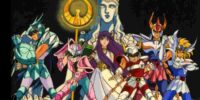
Dragon Ball (1986, followed by Dragon Ball Z in 1989) became anime's first global franchise. Saint Seiya (1986) triumphed in France, Latin America and Italy. Sailor Moon (1992) reinvented the magical girl for teenagers — and gave rise to an unprecedented worldwide female fan culture. Slam Dunk (1993) changed how basketball was perceived in Japan. And in 1999, One Piece began — it is still running in 2026, with more than 1,100 episodes.
The international dimension — from Grendizer to Miraculous
Toei has always looked beyond Japan. In the 1980s, the studio did subcontracting work for American productions: Transformers, G.I. Joe, My Little Pony, Jem, Dungeons & Dragons — series whose animation was produced in Japan for American studios. This collaboration ended in the late 1980s, but Toei kept its international channels active.
In 2015, Miraculous Ladybug marked a major Franco-Japanese co-production for Toei — in the line of The Mysterious Cities of Gold. The series, co-produced with the French company Zagtoon, became a global phenomenon on Netflix. In 2022, Toei signed a strategic partnership with the South Korean group CJ ENM. Internationalization is now structural.
Historical note: in October 1998, Toei Dōga officially changed its name to Toei Animation — the name it had already used internationally for decades. The Japanese name had finally caught up with the company's global reality.
Selected filmography
| Year | Title | Significance |
|---|---|---|
| 1958 | Hakujaden (The Tale of the White Serpent) | ★ First Japanese color animated feature |
| 1963 | Ken the Wolf Boy (TV) | Toei's first TV series |
| 1966 | Sally the Witch | ★ The first magical girl in history |
| 1968 | Cyborg 009 | Ishinomori — a landmark series |
| 1972 | Devilman / Mazinger Z | ★ Codifies the super robot |
| 1975-77 | UFO Robo Grendizer | ★★ A phenomenon in France in 1978 |
| 1979 | The Castle of Cagliostro (Tokyo Movie Shinsha) | Miyazaki's first feature film, after his Toei years |
| 1982-83 | The Mysterious Cities of Gold (Studio Pierrot / DiC) | France — a cultural phenomenon (listed for context) |
| 1986 | Dragon Ball | ★★ Global franchise |
| 1986 | Saint Seiya | ★ Animage Grand Prix 1987 |
| 1992 | Sailor Moon | ★★ Animage Grand Prix 1992 |
| 1999 | One Piece | ★★ Still running in 2026 |
| 2004 | Pretty Cure (first season) | Magical girl — an ongoing franchise |
| 2015 | Miraculous Ladybug (co-produced with Zagtoon) | Franco-Japanese co-production |